
Bali has no tigers. It has no confirmed leopards either, whatever you may have read. What it does have is a mountain forest full of deer, boar and macaques, a critically endangered starling that exists in the wild almost nowhere else on earth, civets that cross the garden at night, monitor lizards on the riverbank and geckos in every roof on the island.
We live at the foot of Mount Agung, in a valley in Selat where the farmland runs up into forest. This is an honest account of what lives in Bali now, what is gone, and where you can reasonably expect to see some of it without paying for a ticket.
| Animal | Status in Bali | Where it lives | Chance of seeing one |
|---|---|---|---|
| Long-tailed macaque | Common | Forest, temple sites, Ubud and Uluwatu | Very high, if you go to them |
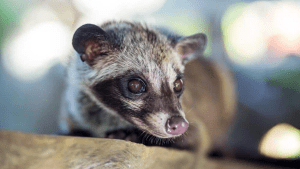
| Asian palm civet | Common but nocturnal | Plantations, gardens, roofs | Moderate, usually at night |
| Wild boar | Present | Forest and upper farmland | Low, mostly tracks and diggings |
| Javan rusa deer | Present, localised | Forest, Bali Barat, upper slopes | Low |
| Water monitor | Common | Rivers, rice fields, coast | High near water |
| Tokay and house geckos | Everywhere | Every building on the island | Certain |
| Bali starling | Critically endangered, endemic | West Bali and Nusa Penida release sites | Low, and worth the effort |
| Javan leopard | No confirmed population | Java, not Bali | Effectively nil |
| Bali tiger | Extinct since the 1930s | Nowhere | Nil |
No, not in any confirmed sense. The Javan leopard is a critically endangered subspecies that survives in the forests of Java, and there is no verified breeding population in Bali. Historical records describe leopards on the island, and every few years somebody reports a sighting on the slopes of one of the volcanoes, but none has been confirmed by camera trap or specimen in modern times.
What people usually see, in poor light and at a distance, is an Asian palm civet, which is cat-sized with a long body and a banded tail; a large water monitor moving through undergrowth; or one of the island's countless free-roaming dogs. If you are hoping to see a big cat in Bali, the honest answer is that you will not, and that the island's real wildlife story is smaller, quieter and more interesting than that. Source: International Union for Conservation of Nature (IUCN) Red List. Panthera pardus melas (Javan leopard).
The Bali tiger was real, it was the smallest of the tigers, and it is gone. It survived only on this island, was hunted heavily under Dutch colonial rule as farmland spread, and the last confirmed animals were shot in west Bali in the 1930s. A few skins and skulls sit in European museum collections, and that is all that physically remains.
The tiger has not left Balinese culture, though. It appears in temple carvings, in painting, and in the barong ket and barong macan traditions, where the animal is still danced long after the last of them died. If you searched for the Bali tiger hoping to see one, what you can actually see is that.
Very few, and not the ones people expect. Traffic causes far more harm to visitors than any animal. After that come mosquitoes, because dengue is present year round and peaks in the wet season, and then dogs and monkeys, because bites happen and Bali has rabies, so any bite needs washing and immediate medical attention. Snakes and centipedes exist, are genuinely rare to encounter, and are covered properly in our guide to the small creatures you might meet.
Above the last of the farmland, Agung's slopes carry montane forest, and that is where most of Bali's wild mammals now live, including the forests around Selat at the top of our own valley. Wild boar leave churned earth and tracks along the forest edge. Long-tailed macaques move through in troops, noisier than anything else on the mountain. Civets are widespread and almost entirely nocturnal. Deer are present but shy and much reduced in range.
The birds are the reward for being up early. Crested serpent eagles and brahminy kites work the thermals over the ridges through the morning. Swiftlets pour out of the gullies at first light. Guides who take guests up for the sunrise trek see more wildlife in the two hours before dawn than most visitors see in a fortnight, largely because that is when the forest is awake.
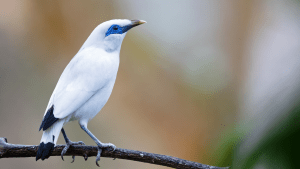
The Bali starling, also called the Bali myna, is the island's most famous animal and one of the rarest birds in the world. It is snow white with a black wing tip and a startling blue mask, it is found in the wild nowhere but Bali, and by the turn of this century the wild population had fallen to a handful of birds in the far west of the island. Captive breeding and release programmes in Bali Barat National Park and on Nusa Penida have pulled it back from the very edge, and seeing one is now possible with effort and a guide.
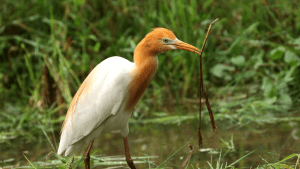
In the valley you will not see a starling, but you will hear a great deal else. Javan and collared kingfishers hunt the irrigation channels and are impossible to miss once you know the flash of blue. Olive-backed sunbirds work the flowers around the terraces. Yellow-vented bulbuls are the ones making most of the noise at breakfast. Cattle egrets follow the ploughs in white lines across the rice fields, which is one of the classic sights of rural Bali. There is more on the everyday birds in our guide to the birds and primates of the river villages.
Bali's monkey is the long-tailed macaque, and your experience of it depends entirely on where you meet it. In the forest, wild troops keep their distance and move off when they hear you coming. At the temple sites where they are fed daily, at Ubud, Uluwatu and Sangeh, they are confident, clever and entirely unbothered by people, which is why they take sunglasses, phones, water bottles and anything that looks like food.
If you visit one of those sites, carry nothing loose, do not hold food, do not make eye contact and do not try to take anything back from an animal that has decided it is now theirs. Bites and scratches do happen, and because Bali has rabies, any bite means washing the wound thoroughly and seeking medical care the same day rather than the next.
None of it is arranged, none of it is fed, and that is rather the point. An open-plan house facing the jungle puts you closest to it, a river-view house puts you nearest the monitors and kingfishers, and a cabin with its own garden fills with birds at dawn.
Free, and best at dawn. Walk the terrace paths and the forest edge with somebody local who knows where the kingfishers fish and where the boar have been. There is more on walks and guides in our guide to Sidemen.
The far west of the island, roughly four hours from the valley, and the only place with a genuine wild population of Bali starlings. Also deer, macaques and good snorkelling off Menjangan island. Worth an overnight rather than a day trip.
Home to a successful community-led Bali starling release programme as well as seabirds and, in season, manta rays offshore.
Bali has a safari park, a bird park and a zoo, and they are the top results for most wildlife searches about the island. They are captive collections rather than wild encounters, and opinions on their conservation value and animal welfare vary widely. We do not book them for guests and we do not tell guests not to go. If you are considering one, read recent independent reviews of the specific attraction and make your own decision.
Bali's wild animals include long-tailed macaques, Asian palm civets, wild boar, Javan rusa deer, water monitor lizards, flying foxes, geckos including the large tokay, a wide range of birds, and the critically endangered Bali starling. There are no big cats. Most large mammals live in forest on the volcanoes and in Bali Barat National Park in the far west.
There is no confirmed leopard population in Bali. The Javan leopard survives in Java and is critically endangered. Historical accounts mention leopards in Bali and occasional sightings are still claimed, but none has been verified in modern times. Reported sightings are usually palm civets, large monitor lizards or dogs seen at a distance.
No. The Bali tiger was a real subspecies, the smallest of all tigers, and it was hunted to extinction. The last confirmed animals were shot in west Bali in the 1930s. Only a few skins and skulls survive in museum collections. The tiger still appears in Balinese carving, painting and barong performance.
Very little. Traffic is by far the greatest risk to visitors, followed by mosquitoes, since dengue is present year round. Dogs and monkeys can bite and Bali has rabies, so any bite needs immediate cleaning and medical care. Snakes and centipedes exist but encounters are rare and almost always avoidable.
For wild animals, walk the forest edge and rice terraces at dawn in East Bali, or visit Bali Barat National Park in the far west, which holds the only wild population of Bali starlings along with deer and macaques. Nusa Penida has a community starling release programme. The island's safari and bird parks are captive collections rather than wild encounters.
The Bali starling, or Bali myna, is a white bird with black wing tips and a bright blue mask, found in the wild only in Bali. It is critically endangered and the wild population fell to a handful of birds around the year 2000. Captive breeding and release programmes in Bali Barat National Park and on Nusa Penida have since increased numbers.
Ready to set out on your adventure and experience the magic of Bali? Secure your stay at Hideout Bali today and uncover the beauty of The Island of Gods like never before. Whether you are searching for tranquil landscapes, exhilarating experiences, or cultural immersion, we provide the ideal retreat for your East Bali journey. Click here to begin your unforgettable experience now!


