
Yes, Bali has snakes. It also has geckos the length of your forearm, centipedes with a bite you would remember, frogs that sing all night after rain, and spiders that look far worse than they are. Almost none of it has any interest in you.
We live in a river valley in Selat, East Bali, in bamboo houses that are open to the air. We see these animals most days, which is a reasonable qualification for writing about them calmly. Here is what actually lives here, where you are likely to meet it, which ones matter, and what to do if one of them takes an interest in you. For the larger wildlife of Bali, from macaques to the leopard question, we have written a separate guide.
| Animal | How common | Where you meet it | Does it matter? |
|---|---|---|---|
| House gecko (cicak) | Every night, everywhere | Walls and ceilings, near lights | No. It eats mosquitoes. Consider it staff. |
| Tokay gecko (tokek) | Common, heard more than seen | Roof beams, palm trunks | No, unless you pick one up. |
| Garden skink | Very common, daytime | Paths, walls, leaf litter | No. |
| Water monitor | Occasional | River banks, rice fields | No. It leaves before you get close. |
| Rat snake, tree snake | Occasional | Rice fields, gardens, hedges | No. Not venomous. |
| Pit viper, cobra, krait | Rare | Rice fields and plantations, mostly at night | Yes. Give it room and walk away. |
| Giant centipede | Occasional, more in wet season | Damp corners, under stones and pots | Painful bite, rarely dangerous. |
| Frogs and toads | Everywhere after rain | Ponds, pool edges, paths | No. |
| Huntsman spider | Common | Walls, ceilings, bathrooms | No. Not medically significant. |
| Mosquitoes | Everywhere, dusk and dawn | Anywhere still and shaded | Yes. This is the one to actually manage. |
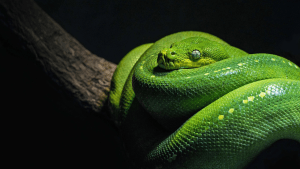
Yes, and you are unlikely to see one. Bali has somewhere over thirty snake species, the large majority of them harmless to people, and the few that are dangerous are shy, mostly nocturnal, and live where people are not: irrigation channels, plantation edges, long grass and rice fields. In several years of guests walking these paths daily, our most common snake story is somebody watching a green tree snake cross a wall and asking what it was.
The ones you are most likely to see are non-venomous. Rat snakes are long, fast and brown, and they live wherever there are rodents, which means the edges of rice fields. Tree snakes, including the paradise tree snake, are slim and beautifully patterned and spend their time in hedges and low branches. Reticulated pythons live on the island and grow very large, but they keep to river valleys and plantations and a sighting is a story worth telling, not a hazard.
The ones worth knowing by name are the white-lipped pit viper, a small bright green snake that hunts at night in low vegetation; the Javan spitting cobra, which is nocturnal and prefers rice fields and open farmland; and the banded krait and Malayan krait, which are highly venomous and also famously reluctant to bite. King cobras exist in Bali but are rare and shy. Sea snakes appear around some dive sites and are not aggressive.
Stop, then back away slowly and give it a wide berth. Do not try to move it, photograph it from close range or kill it. Most snakebites anywhere in the world happen when somebody tries to handle or kill the animal. If it is inside a building, leave the room, close the door and call staff, who will call somebody who does this properly.
Keep the person calm and still, and keep the bitten limb below heart level and as motionless as possible. Remove rings and watches before swelling starts. Do not cut the wound, do not try to suck out venom, do not apply a tourniquet and do not apply ice. Note what the snake looked like if you can do so safely, and get to hospital straight away. The referral hospitals for snakebite are in Denpasar, and antivenom stocks are held there rather than at village clinics. (Bali International Hospital - Jl. Bypass Ngurah Rai. 126 Kawasan Ekonomi Khusus Sanur, Lot H1-H2, Jl. Bypass Ngurah Rai No.101, Sanur Kaja, Denpasar Selatan, Denpasar City, Bali 80227)
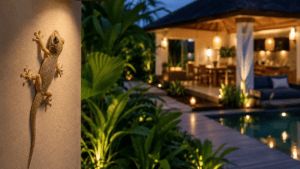
Two geckos share every building in Bali, and neither is a problem.
The house gecko, cicak in Indonesian, is the small translucent one that gathers near lamps at night to eat the insects the light attracts. A house with plenty of cicak is a house with fewer mosquitoes. They chirp, they drop occasionally, and they are entirely harmless.
The tokay, tokek, is the other one, and it is the reason first-time visitors sometimes sit up in bed. It is a heavy, blue-grey lizard patterned with orange spots, and a big one is around thirty centimetres from nose to tail. It lives in roof spaces and palm trunks and announces itself with a loud, deliberate call that sounds exactly like its name: to-kay, to-kay. Balinese custom holds that hearing the call repeated seven times is good luck, and counting along is a better response than reaching for a shoe. A tokay will bite hard if you grab it, and will otherwise spend its life ignoring you and eating insects.
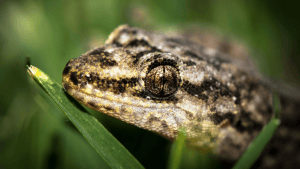
Garden skinks are the small brown lizards that scatter off the path in front of you all day. Changeable lizards sit on walls doing press-ups in the sun. Flying lizards, which glide between trees on ribbed skin flaps, are around if you look up and are one of the better things to spot from a terrace.
The water monitor is the one that surprises people, because a mature animal can pass a metre and a half in length. They swim well, live near water, eat carrion, eggs and anything slow, and they retreat as soon as they notice a person. If you see one on the riverbank, stand still and watch. It is the closest thing to a dinosaur in the valley.
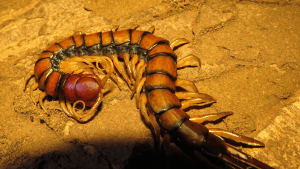
This is the animal most worth respecting in this article, and it is still a small risk. Scolopendra centipedes grow to around fifteen to twenty centimetres, are dark red-brown with pale legs, and move fast. They are nocturnal and they like damp: leaf litter, the underside of stones and plant pots, and, especially in the wet season, the cool inside of a shoe or a folded towel.
A bite is genuinely painful. People compare it to several wasp stings at once, with swelling and redness around two puncture marks, and the worst of it usually passes within a few hours to a day. For a healthy adult it is rarely medically serious. Children, elderly people and anybody with a history of severe allergic reactions should be seen by a doctor.
Shake out shoes, towels and folded clothes before using them, particularly in the wet season. Keep bags closed. Do not leave clothing on the floor overnight. Use a torch on paths at night. Keep damp leaf piles away from doorways. None of this is dramatic, and it is the same list any local household follows without thinking about it.
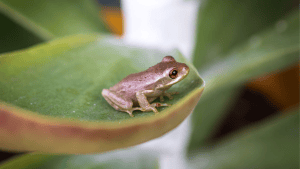
After the first proper rain of the season the valley becomes genuinely loud. Tree frogs the size of a thumbnail stick to windows and pool edges, and the chorus from the rice terraces runs most of the night. It is one of the sounds people remember longest, and several guests have asked us, slightly embarrassed, whether it can be turned down. It cannot.
The Asian common toad is the lumpy brown one that sits on paths after dark eating insects. Do not handle it, because its skin secretions irritate, and wash your hands if you do. Otherwise both frogs and toads are entirely harmless, and a valley full of them is a sign of clean water and a working ecosystem. The same goes for the birds you will hear at dawn.
Bali has no spider that poses a meaningful threat to a person. The huntsman is the one that causes gasps: flat, fast, palm-sized and fond of walls and bathrooms. It is harmless and it eats things you like even less. Orb weavers string large webs across gardens overnight and are best admired at breakfast, when the light catches them.
Ants are constant and the only real defence is sealing food. Termites and beetles come to lights at the start of the wet season for a few evenings and then vanish.
The insect that actually matters is the mosquito. Dengue fever is present in Bali and cases rise in the wet season. The mosquito that carries it bites during the day as well as at dusk, which surprises people. Use a repellent containing DEET or picaridin, cover up at dawn and dusk, and use the net over the bed, which every one of our houses provides. That is the whole strategy, and it works. There is more in our notes on what to pack.
Ranked honestly, by how likely each one is to affect a visitor's trip.
| Rank | Risk | Why |
|---|---|---|
| 1 | Traffic, especially scooters | By a wide margin the most common cause of injury to visitors in Bali. Helmets, an international licence and travel insurance that covers scooters matter more than anything else on this page. |
| 2 | Mosquitoes | Dengue is a real and recurring risk, particularly in the wet season. Manageable with repellent and a net. |
| 3 | Dogs and monkeys | Bites happen. Bali has rabies. Wash any bite thoroughly with soap and running water and seek medical care immediately for post-exposure treatment. Do not feed monkeys and do not carry loose food or sunglasses near troops. |
| 4 | The sea | Currents and rip tides on the south and west coasts, and the occasional jellyfish, cause far more trouble than anything with scales. |
| 5 | Snakes and centipedes | Real but rare, and almost always avoidable with shoes, a torch and the sense to leave animals alone. |
It would be dishonest to write all this and then not answer the obvious question. Our houses are built of bamboo and several of them are open to the valley on at least one side, so the outdoors is closer here than it is in a sealed hotel room. In practice that means geckos on the beams, frogs after rain, the occasional moth at the lamp, and staff who check rooms and turn down mosquito nets every evening as a matter of routine.
If that sounds wonderful, you will be very happy in an open-plan house, and a glamping hut is the fullest version of it. If you would rather have walls and doors between you and the night, we have enclosed houses in private gardens, and there is no shame at all in choosing one. Both kinds of guest sleep well; they just want different things.
You can see the full range across our houses in the valley, and if you are still deciding, tell us how you feel about geckos and we will point you at the right one.
Yes. Bali has more than thirty snake species, and the great majority are harmless. The venomous ones, including pit vipers, spitting cobras and kraits, are shy, mostly nocturnal and live in rice fields, plantations and long grass rather than in buildings. Most visitors never see one. Wear closed shoes at night, carry a torch and never try to handle or kill a snake.
A giant centipede bite is very painful but rarely medically serious for a healthy adult. Expect sharp pain, swelling and redness for a few hours to a day. Children, elderly people and anyone prone to severe allergic reactions should see a doctor. Deaths are extremely rare worldwide and the animals are not aggressive; nearly all bites happen through accidental contact.
Immerse the bite in water as hot as you can comfortably tolerate for thirty to sixty minutes, which is the most effective treatment for the pain. Wash the wound with soap and water, take a painkiller and an antihistamine if you have them, and keep the area clean. Seek medical care if swelling spreads, if you feel unwell, or if the person bitten is a child.
No. Tokay geckos are not venomous and will not attack you. They live in roofs and trees, eat insects, and announce themselves with a loud call that sounds like their name. They bite hard if you pick one up, which is the only reason to leave them alone. Having them around is a good sign, not a problem.
No. Bali has no spider that is medically significant to people. The huntsman spider is large, fast and startling on a bathroom wall, and completely harmless. Orb weavers build big garden webs overnight and are equally harmless. If a spider bothers you, staff will move it outside.
It is worth using one, and in an open bamboo house it is essential. Dengue fever is present in Bali and rises in the wet season, and the mosquito that carries it bites in daylight as well as at dusk. Use repellent containing DEET or picaridin, cover up at dawn and dusk, and sleep under the net. Every one of our houses has one.
Ready to set out on your adventure and experience the magic of Bali? Secure your stay at Hideout Bali today and uncover the beauty of The Island of Gods like never before. Whether you are searching for tranquil landscapes, exhilarating experiences, or cultural immersion, we provide the ideal retreat for your East Bali journey. Click here to begin your unforgettable experience now!


